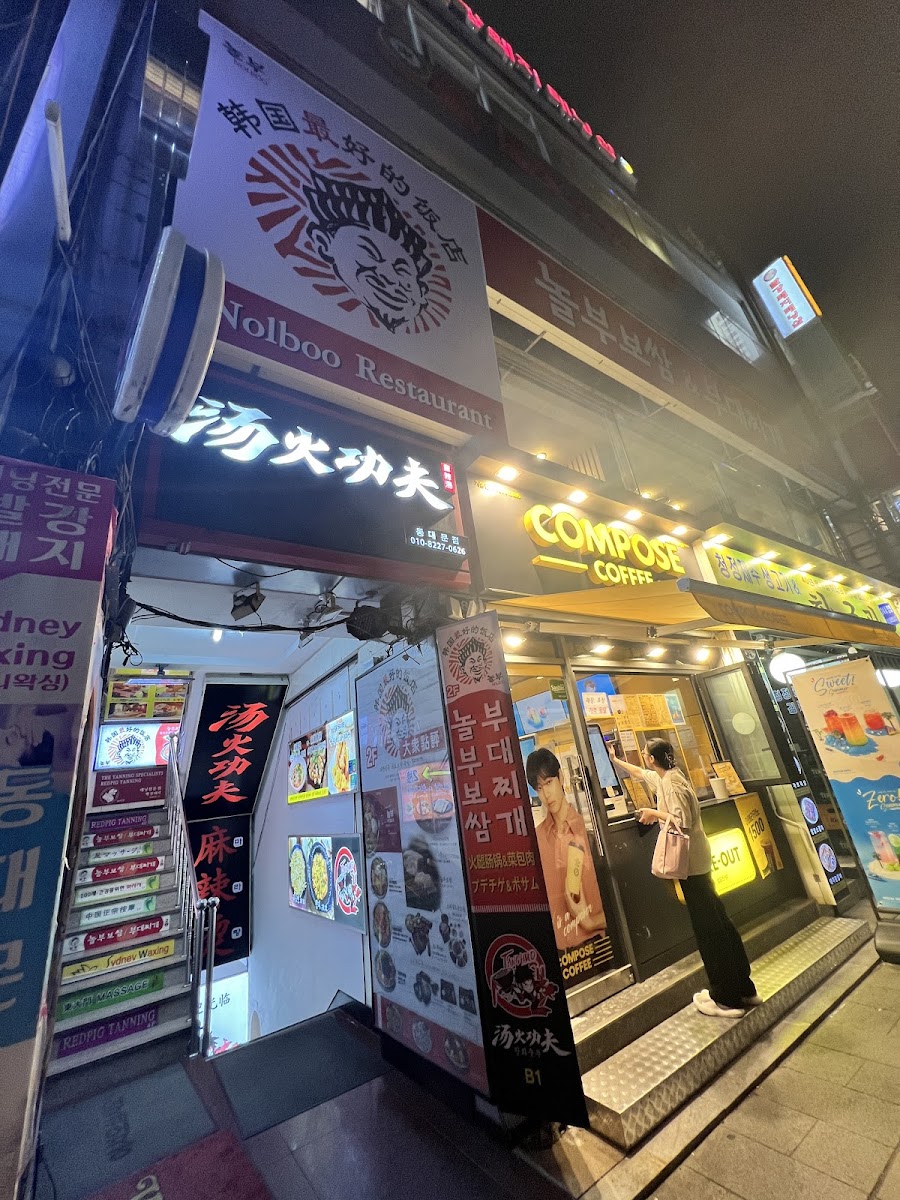
We stumbled across this restaurant at Dong Dae Mun. So happy to have found it even though it is located on level 2. We ordered the 2 person budae jiggae and bossam set (about 43,000 KRW if I remember correctly?) which came with yummy banchan! The people attending to us was very nice and we felt welcomed even though we could not speak the language. The server in the picture also explained to us how to best enjoy the meal. We left with happy tummies. Please support!
Overview
If you ever find yourself wandering around Dongdaemun after a long day of shopping or exploring the Design Plaza, Nolboo Bossam Nolboo Budaejjigae(Euljiro 6-Ga Branch) is the kind of place that quietly pulls you in with the promise of something warm, hearty, and unmistakably Korean. Tucked at 서울특별시 중구 을지로43길 34, 18-103 Euljiro 6(yuk)-ga, Jung District, Seoul, South Korea, this branch feels like a dependable neighborhood diner, yet it carries the weight of a well-known Korean franchise with decades of history behind it.
I first visited on a chilly evening when the wind cut straight through Euljiro’s narrow streets. Inside, the atmosphere was relaxed and unpretentious-wooden tables, stainless steel chopsticks, and the comforting hum of locals chatting over bubbling pots. What struck me immediately was how organized the service felt. Staff guided us through the menu with confidence, explaining portion sizes and spice levels, which is helpful if you’re not used to Korean stews.
The two stars here are bossam and budaejjigae. Bossam, for the uninitiated, is tender boiled pork belly sliced thick and served with napa cabbage, fresh garlic, ssamjang (soybean paste), and spicy radish kimchi. According to the Korea Agro-Fisheries & Food Trade Corporation, pork remains one of the most consumed meats in South Korea, and dishes like bossam highlight why-it’s flavorful, balanced, and meant to be shared. At this branch, the meat arrives glistening and delicately sliced, with just enough fat to keep each bite juicy without feeling heavy. Wrapping the pork in crisp cabbage with a dab of paste and kimchi creates that perfect harmony of savory, spicy, and slightly sweet.
Then there’s budaejjigae, often translated as army stew. Its origin traces back to the post-Korean War era when surplus military ingredients like spam and sausages were incorporated into traditional Korean soups. Food historians and culinary researchers, including those referenced by the Korean Food Promotion Institute, often cite budaejjigae as a symbol of resilience and adaptation in modern Korean cuisine. At Nolboo, the stew comes to the table still simmering, packed with kimchi, tofu, sliced sausages, luncheon meat, mushrooms, baked beans, and ramen noodles. The broth is deep red, spicy but not overwhelming, layered with umami from fermented ingredients.
What I appreciated most was the balance. Some places push the spice too far, masking the complexity of the stock. Here, the broth tasted carefully developed-likely simmered with anchovy and kelp base before adding gochujang and gochugaru. The staff even showed us how to adjust the heat as it boiled, letting the noodles cook last so they wouldn’t turn soggy. It’s a small detail, but it reflects experience and consistency, something regular diners mention often in their reviews.
Portion sizes are generous, making it a smart choice for groups. On my second visit, I came with three friends, and we ordered a medium bossam set with a shared budaejjigae. It easily fed all of us, with banchan (side dishes) replenished without hesitation. That kind of attentive service builds trust. While I can’t confirm every sourcing detail of their ingredients, the freshness of the vegetables and the clean taste of the pork suggest a reliable supply chain, which is essential in maintaining food safety standards in Seoul’s competitive dining scene.
Location-wise, being in Euljiro 6(yuk)-ga makes it accessible from Dongdaemun History & Culture Park Station, which is a huge plus if you’re navigating Seoul’s subway system. The area is busy but not overwhelmingly touristy, so you get a more local dining experience. Lunchtime sees nearby office workers filling the tables, while evenings attract families and friend groups looking for comfort food.
Prices are reasonable considering the portion sizes and central Seoul address. Compared to trendier fusion spots, this place leans into tradition and consistency. It doesn’t try to reinvent Korean cuisine; instead, it focuses on doing the classics well. That’s probably why the Nolboo brand has endured for years across multiple locations.
If you’re exploring Jung District and craving something authentic, filling, and rooted in Korean culinary history, this branch delivers exactly what you’d hope for from a reliable diner: a thoughtful menu, solid flavors, steady service, and dishes that feel both nostalgic and satisfying.
Good to know
Service options
✓ Dine-inPopular for
✓ Lunch ✓ DinnerAccessibility
✓ Wheelchair-accessible car park ✓ Wheelchair-accessible entrance ✓ Wheelchair-accessible seatingOfferings
✓ Alcohol ✓ Beer ✓ Quick biteDining options
✓ Lunch ✓ Dinner ✓ Table serviceAmenities
✓ ToiletAtmosphere
✓ CasualCrowd
✓ GroupsPlanning
✓ Accepts reservationsPayments
✓ Credit cards ✓ Debit cards ✓ NFC mobile paymentsPhotos
1 / 4
Location
Reviews
- No ratings yet 166 reviews
the owner is very kind and the food was delicious!! thankyou